Showing posts with label Makerspace. Show all posts

Saturday, June 6, 2015

Makerspace: A Semester's Resource Masterpost


Overall my makerspace has had a great year. I't's gone by super fast - there's something to be said for just jumping in there, but there's a learning curve that can be a little hard to jump. So in case it can help anyone else, I'm going to write about some of the opportunities I've found and the stuff I've learned here!


FUNDING:


Codecademy, in a collaboration with Google and Donorschoose, offers codes worth $100 on a Donors Choose project to support a classroom program to every student who completes their tutorials through a school program. This is a great opportunity for ANY school Makerspace to get some funding while teaching kids about programming. Although the program advertises itself as solely for High Schools, there are options for all grades and schools, and it wasn't a problem for my middle schoolers. The program is closed for 2015 right now, but it pops back up annually, so watch that space!

I'm also going to be looking at the NCWIT AspireIt awards. I was a national runner up and regional winner this last year, which is how I learned about the opportunity (For other girls in high school or college - APPLY, APPLY, APPLY!)

Also, the teacher sponsoring my club was even able to set up a Donorschoose project, where we're trying to raise money to get a 3D printer for next year. If you want to fund the project, you can find a link here. If you're able to give support, any would be appreciated!

ACTIVITIES:


However, even though funding was limited, I was able to come up with ways to make the materials I DID have stretch, to groups ranging from a core group of about 20 students, to larger groups of up to 50-60 at one point. What I found worked really well was:

- Dividing the kids into groups, and assigning each group a different part of the activity. For example, I was able to spread my two Mindstorms kits across a large group by assigning each smaller group to build a certain part of the robot.

- Alternating activities between groups: While I was able to raise enough money with my earlier fundraiser to buy 15 Arduino Uno clones for the Makerspace, I was still limited in the number of computers we had to program them. To fix this problem, I divided the kids into two groups: one spent the first half of the time building circuits, and the other, programming. Then they switched, so everyone got a chance to try everything

-Large group discussion/brainstorming activities: During the weeks I was short on materials or planning time, I defaulted to activities that didn't need anything more than a pen and some paper, or computers. I took inspiration from a middle school SMU competition called Visioneering, which I participated in in the 7th and 8th grades. In the competition, teams of students are challenged to create plans for solving some problem with technology, no matter how expensive or "out there". For my adaptation, I had each table brainstorm a plan for improving the school using technology, which they had to share with a group at the end of the class period.

Those are just the ones that come to mind right now. Over the summer, I plan on putting together some guides to the various lessons/projects we did, and, ideally, I'll publish them somewhere online (though exactly where is TBD. I'll post a link here as soon as I figure it out).

PLANS:


For next year, I'm looking at trying to expand my program to merge with one at an existing elementary school in the area, though that plan is still very much in its "what if?" stage. I'll also have a chance to talk to the principal soon about getting the sorts of programs we'd need on the school computer. Plus, over the summer, I'll hopefully have a few more volunteers to assist me with planning meetings and keeping track of the budget. So overall, there's still a lot of work to be done, but I feel good about my plans as the next year comes around.

OTHER HELPFUL THINGS:

Don't be afraid to ask for help, information, or anything else from people who seem interested. You'd be surprised what you can learn.

Practice talking about your project. You should be able to give a compelling summary in 30 seconds.

The fancier the technology, the less time you'll have to do the activity (You have to account for the ooh-and-aahing).

If you're having fun, chances are everyone is.


Anyone have any comments, other suggestions, or anything to say? Please, comment below!


Thursday, April 16, 2015

The Importance of the Humanities in STEM

Let's start with an easy opinion to swallow:  The US has a problem with its STEM education. But not in the way you might think. The trouble with STEM in the US isn't that we rank low worldwide in math, or in science. It's that the money going toward improving those test scores is too often taken from the arts. And it shouldn't be. That might sound odd coming from me - the organizer of a STEM program that serves 50+ kids, as well as an engineer and programmer - but hear me out. It's not that I think STEM education is useless, or that we need to take resources away from science and technology classes. But too many schools teach STEM materials poorly, and at a much bigger cost than they realize.

In the digital age, we're hyperfocused on teaching math and science to "catch up" to countries like China and India in terms of scores on international exams. This emphasis on test scores has increased funding for STEM programs - great! Student interest can flourish. Teachers can get new technology for their classrooms. And where the funding is used to improve test scores, they improve. It's a win/win deal.   But that funding has to come from somewhere, and often it comes from budget cuts in the liberal arts and humanities. That is very, very bad.

Note: Not how the brain works. 

We seem to have this idea that STEM and the arts are two immutably separate entities. Just ask an engineering major what they think of the liberal arts at their university, or vice versa. It follows that they have to be in constant competition - one has to be more important. You can't have both science AND religion. You can't love both math AND painting. Maybe such a divide meant more when technology was factory machines and assembly lines, but the way we use technology has changed immensely even in the past few years. Supporters of STEM education often remind us that, in the future, every job from will require some knowledge of technology. But the reverse is also true: every worker in a STEM related field would benefit from the kind of education that comes with the arts. 

There's so much more to building, programming, and selling a computer than hardware specifications. A computer has to be used by humans, humans that bring their own aesthetic preferences, learning curves, and emotional pulls to the table. All of that has to be designed into the machine, and there's more to it than statistics. There's some psychology, some visual arts, maybe even some music or some writing. Computers are sold as lifestyles, not machines. And that' s not even counting the interpersonal skills the production team had to use to brainstorm, or the dozens of concept sketches and pitches created before the final design was chosen.  There's a creativity needed to get ahead in technology, and it doesn't come from the  skill set that makes kids better at taking math tests. But somehow, although the need for the humanities in technology becomes more prevalent every day, we've been devaluing the classes and the skills they give us. What can we gain from the humanities in STEM? And how can we make sure those skills aren't left out?


The best STEM class I ever took was a technology class taught by a middle school librarian. (I've mentioned it before, here.) She started the school's technology club the first year I attended - I was one of the founding members. In the club, we tried to finagle our favorite technologies into different parts of the school and curriculum. We taught the English and Social Studies teacher how to make Google Earth tours. We made videos for new students using editing programs and green screens. One member even designed a new website for the school. By the next year, the club has become a class, and one that was unique in two ways. One, we were working with people outside of the class and our experience with technology. Anything we created had to be presented in a way that was easy for anyone to understand and use. Two, our projects were working to solve real world problems, problems that required skills beyond just our programming expertise. 

So we wrote tutorials. We created animated sequences and music for the videos. We read books and drew pictures and argued over the latest technology news. We were able to use the skills we learned in our English, History, Art, and Music classes to augment our projects in the class. While I know the class wouldn't have worked for everyone,  many of the later engineering and science classes I took only focused on teaching the minimal technological  skills necessary for a basic concept. That's fine for a technology class. But those are skills you have to get somewhere. This only emphasizes the importance of Humanities focused classes in all student's education. Those classes are where students gain the skills needed to turn technology into real world solutions for real world people.

As I mentioned before, this is more important today than ever. Take a minute to watch these commercials :


Notice anything about these advertisements? They aren't selling their products based on how many processors they have, or how many transistors they can fit on a chip. They sell computers based on how people use them. And computers are used for so much more than pedigree STEM purposes. You need artists who can create programs for artists. You need historians. You need musicians. If for no other reason, you need art educated people to create the media you enjoy so much today. Every TV show, game, article and more you find online comes from arts education every bit as much as STEM.  Who'd want to live in a world without the art we love? How could we move forward without the art that has inspired us to create new things?

We play a dangerous game by ascribing innovation to the kinds of skills that can be measured by standardized tests. Support your local arts and humanities programs. Bring art into your STEM classes, and STEM into your art classes. Read, watch, create, and enjoy how the world you live in hasn't been created by opposing forces, but a beautiful mixture of every skill humanity has to offer. Push for access to education in each and every one. We've got to create a future that's worth the time we put into it. 


Tuesday, February 24, 2015

Makerspace: Chugging along!

Sorry for the dearth of posts! It's been a rough couple of weeks here, what with school, theatre, and even a coding competition (2nd place!), and the NCWIT Aspirations in Computing Affiliate Award Ceremony!

But mostly, I've been slowly pushing forward with my Gold Award project.
I've held 4 meetings so far this semester. I try to start each one with some kind of a question. For example, a the first meeting I asked what each student thought technology was, and what it was used for. ( I keep the questions open ended, so I sometimes get some... interesting answers.) Then I introduce an activity, and the rest of the meeting is devoted to that activity.

 The first one focused on the engineering design process. I built a ramp at home out of old K'Nex kits, and had students divide into groups to try and design a Lego car that could jump off the ramp from one desk to another. The group work turned out well - it's definitely something I'll continue. The kids really enjoyed the chance to talk more while they worked. Later meetings have been about programming, and more recently, robotics and game design.

The club is also making use of a Google Classroom to keep in touch outside of class. I like the Google Classroom setup, although I find myself wishing it was a little less of a bare-bones framework. I'd appreciate an easier calendar application, intersectionality with google hangouts, etc.

Finally, I was pointed by my sponsor to an assistant principle at my school who was interested in creating a Girls Who Code club at the school. This kind of thing requires a higher-up approval where I live, so it probably won't get started until next year, but it's a step toward getting a wider recognition of what I'm trying to do, and I'm excited to help.

Anyway, this is what the space looks like right now:

The new boxes and ramps are from some of the previous projects.


Slowly but surely, we're getting there!

Coming soon: I PROMISE I will finish my post on my Tic Tac Toe program soon - every time I start writing about it, I end up working on improving it again. Then I've got another book review from the opposite end of the AI spectrum - Ray Kurzweil's "How to Create a Mind." So stay tuned!

Friday, December 12, 2014

Makerspace, Part 2: The Plan.

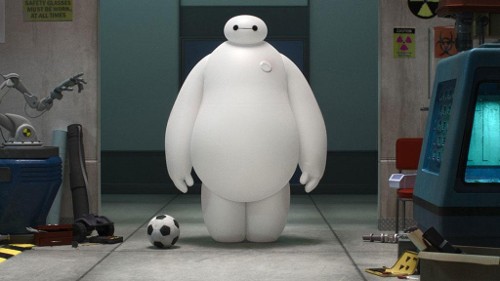
Last week, I finally got to have my first meeting with the middle school Technology club I'm working with to create the Makerspace. We talked about what a Makerspace was, how we were planning to use it in the school, and the various bits and pieces of old projects that I brought to show what kinds of things could be made in a Makerspace. Basically, it was a condensed version of this post, with a few pictures from Big Hero 6 and Iron Man 3 as reference points.

Good movie...  but it was no Wreck-it-Ralph. 

At the end of the meeting, I had ever student write down on their slip of paper the top ten things they wanted to be able to make/learn in the technology club. Over the weekend, I looked through all the answers I got, and came up with the five main units that would be the most useful and interesting to kick off the Makerspace and the Tech Club. The Technology club has two types of meetings - "Class" meetings, which teach skills like the one's seen below, and "Business" meetings, where we'd focus more on the Makerspace itself, and where members would have time to share the projects they've been working on (THAT is for a different post). But the introductory skills are important for the students with little or no experience. So here's what I've put together: 


1. Programming
 This is the obvious one, but I've put it as the first unit because it's a vital skill so many of the other projects the students were interested in, and because it doesn't require expensive materials. I'm working on lesson plans for a programming intro class for Scratch, which will hopefully give enough of an introduction that the students will feel comfortable working on Codecademy tutorials or learning from other online resources


2. Robotics
These kids love robotics almost as much as I do. The issue here is limited time and materials. I'm planning on doing two classes with Mindstorms Ev3 - one for building, one for programming. I'd also like to incorporate robotics into an Arduino introduction later on - I have an RC car that I robotized with an Arduino that would make a good example.


3. Circuitry
While I'd actually prefer this unit before robotics, the littleBits are one of the more expensive items in the budget, and, while I have an Ev3 kit at home that I could bring as an example, the same isn't true here.


4. Computers
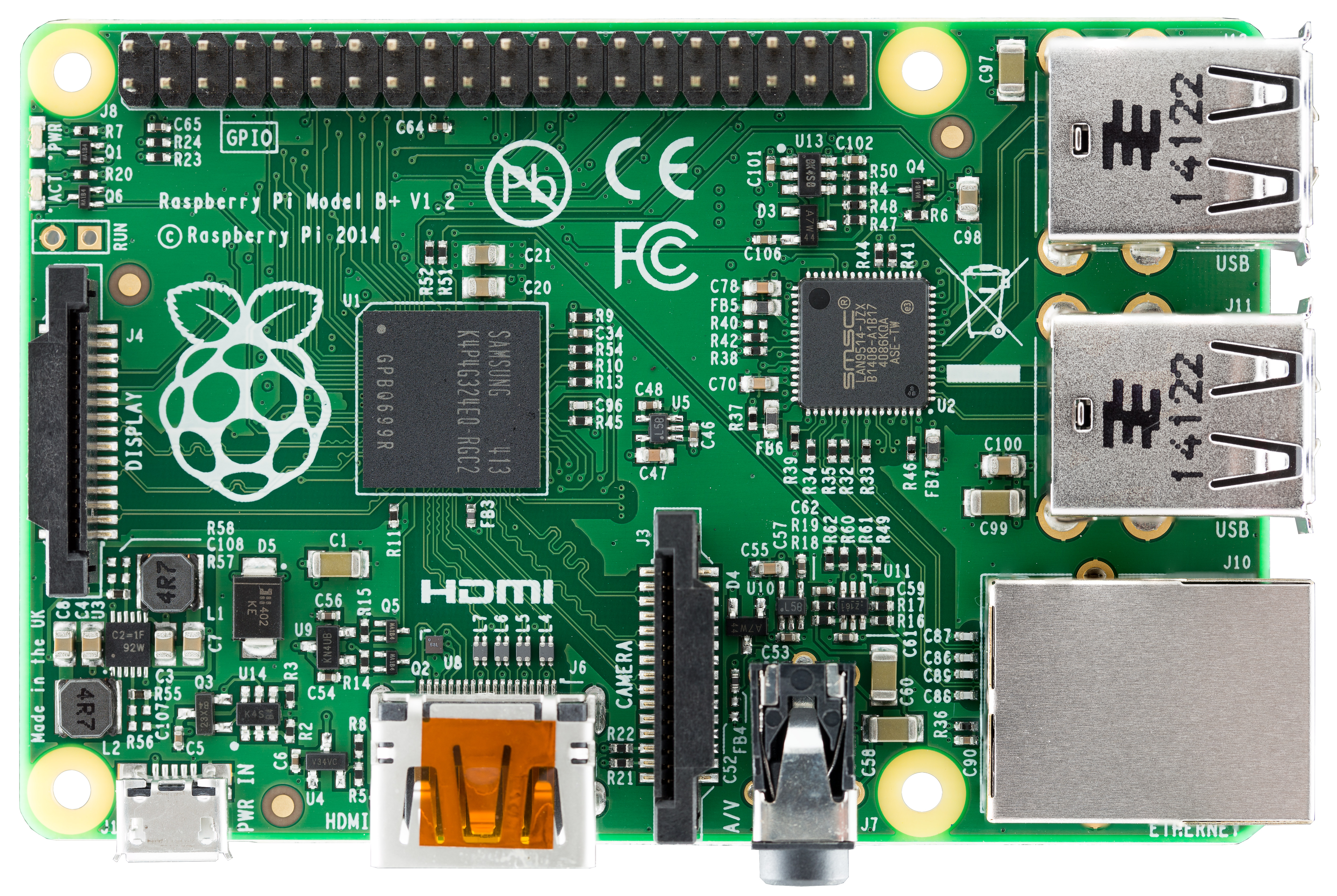
This is kind of a catch-all unit. Here I definitely want to have a class on the Raspberry Pi, but I also want to bring in some of the other Technology Club Alumni to teach classes on things I'm not as familiar with, like App programming and Web Design. (It's interesting to see how our individual interests were foreshadowed through Tech Club and the technology class. The ones who spent all their time on the iPod touches now program them, the ones who spent all their time tweaking Powerpoints and Tshirt designs have gone into 3D animation or computer graphic design. And yours truly MAY have turned in a final paper analyzing potential uses for robots that could create their own languages after researching this. I really should post it here if I can find it.)


5. 3D Printing
I have never had the opportunity to use a 3D printer, and I could not be more excited to learn. That's why this unit is last - I know the least about it, and I need that time to learn. I'm planning on getting the Printrbot kit, and using Google Sketchup and Autodesk inventor to do the modeling, since our school system already has that software.


These are the things we decided would be the most useful. I've said before that you don't need expensive tools to make a Makerspace, and I stand by that statement. But good tools make making more accessible, and especially in a school setting, that's important. And tools cost money.
About $1,300 worth of money, not counting shipping or storage.

I'm looking at a couple different ways of doing money-earning.  For the more expensive kits, I've talked to my sponsor about using DonorsChoose. It seems like a great program, and I'd appreciate the help in offsetting the cost. However, with finals rapidly approaching, we haven't had the chance to talk to the school administration yet. So I've started with some simpler money-earning opportunities. Right now, I'm creating kits for making small light up ornaments to teach younger kids about the basics of circuitry. The kits would also be good for making a string of lights, good for teaching Parallel vs. Series. Plus, who doesn't love holiday themed illumination? Here's a picture of the prototype. I'll be posting a tutorial soon.


I'm selling the kits to local scout troops as an end of year craft project and my goal is to raise about $100 to start off with.

And finally, while I can't expect to rely on donations, I had the opportunity over Thanksgiving break to collect some of my great-grandfather's old tools for use in the Makerspace, which I cleaned up and labeled.


It wasn't anything too fancy - just screwdrivers, wrenches, a level, things that would be useful for building or disassembling small projects. But that toolbox has officially become the first thing in the Makerspace.


It's a long road ahead, but we have a plan. Let the making commence!

PS: One last thing. One of our main concerns with the technology club is the participation of girls. I was one of two girls out of about fifteen people at the clubs inception, a ratio that improved a little  the next year, I suspect because both of us were so active in the club. Now, she's actually come back to help with my project. But we still see the same problem. There were only two girls at the meeting and about twenty boys. Do any of you have suggestions for getting more girls involved? 

Monday, November 24, 2014

Super Secret Special Project: Makerspace!: A Long Introduction.


I've finally caught up with my teasers! I've been pretty busy with school, scouts, other projects, and, yes, my Gold Award project, where I'm hoping to build a Makerspace at my old middle school!

Note: For the uninitiated (credit xkcd)...


A Makerspace, Hackerspace, FabLab, Techshop, etc... is a space devoted to providing materials, instruction, and community to anyone interested in creating. It goes hand in hand with movements like OpenSource, STEAM education, and free information. A Makerspace wants everyone to be able to make, and to find other people who make.

To give a little background - my middle school librarian was an awesome teacher, interested in sharing information, technology, and connection through the library. She started the technology club my first year at our school, where teachers could come and talk about the technology they wanted to use in the classroom (e.g. Google Earth Tours, iPod touches, online video-editing software, etc) and it was up to us to A) figure out how to use the technology, and B) teach the teachers once we figured it out. The club was only the beginning. By the end of the year, 13 of us were enrolled in the Independent Study Tech Team class, taught in the library, by the librarian, for an entire class period each day. The teacher brought some brilliant ideas to the class: 20% time, bringing in projects from other classes to try out the technology, etc. It was basically a maker class! The only thing we lacked was materials.


In the library, we had three things we could work on: Software on the computers (the basics of Windows 7 plus a few class specific things, like Alice), thirty-something iPod touches we rented out to classes, and books. This was a great starting point, but I kept having to bring in my own materials for 20% time to feed my interest in robotics and programming. The teacher introduced me to the idea of a Makerspace my eighth grade year, and the more research I did the more I liked it. The materials I've collected are important to the kinds of projects I get to do - I hate the idea that another kid somewhere won't get to learn about robotics because they don't have access to a mindstorms, or an arduino to learn on.

Ninth grade taught me how useful a Makerspace could be. If you've even taken just a quick look at this blog, you can see I took Tech Theatre, and made full use of the workshop we had available. That workshop is my favorite place in the entire school, because it has everything you need to bring a design to life. Tech Theatre may not be a class devoted to engineering, but I feel that, because of the workshop, and because of the self driven nature of the class and the projects, it does a better job of teaching problem solving, design, and engineering skills than the note-and-test heavy engineering-specific class I took.


I decided to try and find a nearby Makerspace - it turns out the nearest is an hour's round trip from my house. I got a tour to see how the space functioned. It was REALLY cool, but I noticed that it was definitely geared more toward the adult, experienced engineer in price range, classes and tools available, and supervision. That wasn't quite what I was looking for, so I contacted my old librarian to ask her thoughts on creating a Makerspace in Plano... and a few weeks later, she's my Gold Award Project Advisor,  I've sent a powerpoint proposal to the principal of the school, and I'm prepping one to send to my local public libraries! (See the powerpoint here, if you're interested)


What's the plan? Well, the main issue is cost. I spent a long time looking up the costs of materials I'd like to include, and, to say the least, cost was high. I'm planning on organizing a tool drive to try and get some of the cheaper items, like paintbrushes and screwdrivers, old toys to take apart, Ewaste, and the like. Some of the rest will be funded by club member fees, but for a lot of it I'm looking at funding online through Donorschoose.org, or something similar.


Another constraint is space. The area we're looking at converting is currently storage for books that get lent out in English classes for reading assignments. We get a grand total of one bookshelf for storage, so we'll have to use it wisely. This is a real model of the space I made in Sketchup. I'm betting the Technology club will be happy to have it. Right now, I'm still waiting on the final green light from the principal, which will hopefully come in the next couple of weeks. Then I can turn in my paperwork, and get the ball rolling! Expect to see more about this soon, and all the little mini-projects it entails.

(NOTE: I'm going to publish this as is, but it's a little outdated now. I've since had my project fully approved, and the first meeting with the students will be next week! I even had the chance to talk about my project at the Girl Scout Leadership Institute at this year's national convention. I'm super excited to get started. If any of you have ideas for fundraising, or know of good projects or resources for a middle school Makerspace, please comment below! I'd love to hear what you think.)